Museums in the centre of Madrid
- The Real Academia de Bellas Artes: calle Alcalá, 13 (Tel:
91 532 15 46). Set in a 18th century building designed by Churriguera. Famous
artists such as Picasso and Dalí once attended this school of art
which is now a museum and Francisco de Goya was once its director. Its
collection includes pieces by Murillo, Velazquez, El Greco, Ribera, Goya, Rubens,
Van Dick, Rafael, and Tiziano.
- The Centro
de Arte Reina Sofía: c/ Santa Isabel, 52 (next to the Atocha railway
station, Tel: 91 467 50 62). Set in a former 18th century hospital. This museum
which is dedicated to 20th century art was completely renovated in 1992. Its collection
includes pieces by Miró, Dalí, Solana and Chillida as well as many
temporary exhibitions. But its most important piece is the magnificent Guernica by Pablo Picasso.
 The Thyssen-Bornemisza Museum
: Paseo del Prado, 8 (Tel: 91 369 01 51). Set in an 18th century palacecalled el Palacio de Villahermosa, this museum was also renovated
in 1992 in order to hold the collection of art belonging to Baron Heinrich Thyssen
Bormenisza. It also holds the private art collection belonging to the Baroness,
Tita Cervera. You can see many different styles of art in this museum such as
works by: Tiziano, Goya, Van Gogh, Flemish and Italian artists along with Impressionist
and Expressionist works and Pop Art.
The Thyssen-Bornemisza Museum
: Paseo del Prado, 8 (Tel: 91 369 01 51). Set in an 18th century palacecalled el Palacio de Villahermosa, this museum was also renovated
in 1992 in order to hold the collection of art belonging to Baron Heinrich Thyssen
Bormenisza. It also holds the private art collection belonging to the Baroness,
Tita Cervera. You can see many different styles of art in this museum such as
works by: Tiziano, Goya, Van Gogh, Flemish and Italian artists along with Impressionist
and Expressionist works and Pop Art.
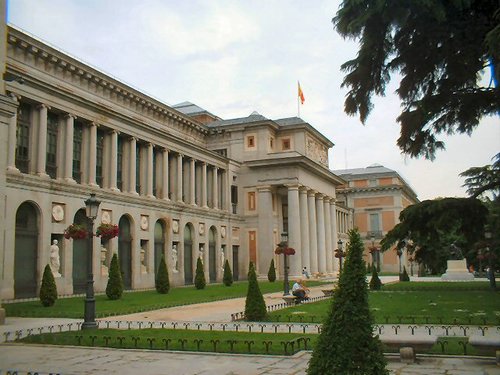
- The Prado Museum: Paseo del Prado, s/n (Tel: 91 330 28 00). Set in a neoclassical building
dating back to 1785 by Juan de Villanueva, this is Spain's most important museum.
It holds the biggest collection of Spanish art from the 12th to the 19th century.
It was opened in 1819. It holds pieces of art by Velazquez, Goya, Ribera and El
Greco as well as works by Flemish, Dutch, French and German artists.
- The National Decorative Arts Museum (Museo Nacional de Artes Decorativas): c/ Montalbán, 12 (Tel: 91 532 64 99). Set in a 19th century palace,
this museum holds pieces of art such as furniture and other decorative objects
which are mainly Spanish. Pieces range from the Phonecian period right through
to the 20th century. Interesting pieces include a collection of jewellery, ceramics
and 1,500 tiles recreating a Valencian kitchen from the 18th century.
 The
National Archeological Museum (Museo Arqueológico Nacional): :
c/ Serrano, 13 (Tel: 91 577 79 12). Founded by Queen Isabel II in 1867. The museum's
collection ranges from prehistoric times to the 19th century. It holds Egyptian,
Greek, Roman, Mudejar, Moorish, Visigothic and Iberian pieces including the Dama
de Elche and la Dama de Baza.
The
National Archeological Museum (Museo Arqueológico Nacional): :
c/ Serrano, 13 (Tel: 91 577 79 12). Founded by Queen Isabel II in 1867. The museum's
collection ranges from prehistoric times to the 19th century. It holds Egyptian,
Greek, Roman, Mudejar, Moorish, Visigothic and Iberian pieces including the Dama
de Elche and la Dama de Baza.
- The Military Museum (Museo
del Ejercito): c/ Mendez Nuñez, 1 (Tel: 91 522 89 77). Set in the
17th century Buen Retiro Palace. This museum holds an important collection of
weapons dating from the Moorish period to modern times. The collection includes
the sword belonging to Cid, la Tizona; the sword and
tunic which once belonged to Boabdil, the last king of Granada;
In the Colonial room you can see part of the cross which Christopher Columbus
placed in American soil on his arrival to the New World and the tree under which
Hernán Cortés took refuge during the Mexican rebellion.
- The Real Academia de Bellas Artes de San Fernando: c/ Alcalá,
13 (Tel: 91 524 08 64). This museum holds a collection of art by the most well
known Spanish artists such as Goya, Ribera and Zurbarán as well as works
by foreign artists such as Rubens.
Other Museums of interest:
- The Sorolla Museum: : Pº Martinez Campos, 37
(Tel: 91 310 15 84). This museum is set in the house where Sorolla,
a famous Valencian artist lived until his death in 1923. The museum holds pieces
by the artist depicting mediterranean scenes. The studio, garden and house have
been preserved in their original state.
- Museo Cerralbo:
c/ Ventura Rodríguez, 17 (Tel: 91 547 36 46). This palace and museum belonged
to the Marqués de Cerralbo, a great art collector who donated his palace
and collection in 1922 under the strict condition that everything would be preserved
in its original state. His collection ranges from Iberian times to the 19th century
and includes furniture, ceramics, tapestries and weapons. The ball room is especially
interesting.
- The American Museum: Av.
de los Reyes Católicos, 6 (Tel: 91 549 26 41). This museum holds all the
pieces of American art brought from the New World by explorers over the centuries.
It includes Precolumbian pieces, along with all the documentation from the first
colonizers who went to America. The Tro-Cartesiano Codex (1250-1500), a Mayan
manuscript brought from Mexico and treasure from the Quimbayas (500-1000 B.C.)
are especially interesting.
- The Lázaro Galdiano
Museum: c/ Serrano, 122 (Tel: 91 561 60 84). Set in a mansion which belonged
to Lázaro Galdiano, a keen art collector, who donated his collection to
the state in 1947. It is a magnificent collection made up of valuable objects:
paintings, clocks, furniture, ceramics...by important artists such as: Constable,
Turner, Gainsborough, Ribera, Zurbarán, Velásquez…
- The
Municipal Museum: c/ Fuencarral, 78 (Tel: 91 588 86 72). Set in a former
hospice in a Baroque style building by Pedro Ribera. The building's facade is
quite magnificent. This museum has exhibits ranging from archeological pieces
to collections of decorative fans and porcelain from the 'Real Fábrica
del Buen Retiro'. It also has an interesting collection of plans of the
city dating back to 1656.
- The Real Fábrica de Tápices: c/ Fuenterrabía, 2 (Tel: 91 551 34 00). Founded by Felipe V in
1721. This museums shows how tapestries were made using traditional methods. You
can also see the sketches Goya y Bayeu made for tapestries for the Royal family.
- The Real Academia de la Historia: : c/ León,
21 (Tel: 91 429 06 11). Founded in 1735, to house monks who made religious books.
In 1898 Marcelino Menedez Pelayo was given the post of director. If you make an
appointment you can visit the library.
- Casa de Lope de
Vega: c/ Cervante, 11 (Tel: 91 429 92 16). Félix Lope de Vega lived
in this house from 1610 until his death and wrote a great number of his comedies
here. In 1935 the house was restored and efforts have been made to return it to
its original state, when it was home to the writer in the 17th century.
| Travelling to Madrid?
The following links may also be useful |
|
|
|
| Guides provinces bordering
with Madrid and beautiful
places in Spain nearby
|
|
|



 Travel guides to Spain