Travel Guides Spain | Guide to Jaén
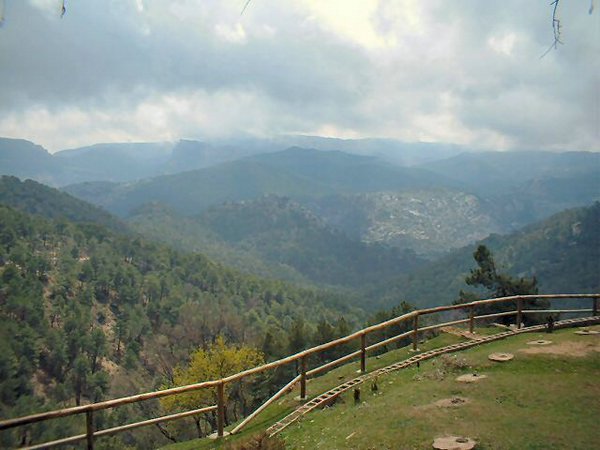 Jaén is a lovely
province in Andalucía. It is also one of the least populated - the whole of Jaen,
13,498 Km², has just 628.000 inhabitants.
Jaén is a lovely
province in Andalucía. It is also one of the least populated - the whole of Jaen,
13,498 Km², has just 628.000 inhabitants.
The fact that for years
it was one of the least visited province in Spain owes much to the terrible roads
and communications leading to this province. But since the new motorways have
been opened, and local roads improved, more and more travellers - from Spain and
further afield - are starting to discover the delights of this beautiful and singular
province. One of Spain's most important rivers, the Guadalquivir, crosses Jaén,
adding to its attractive landscape and fertile lands.
The Cazorla and Segura mountain ranges are visited by tourists all year round, attracted by the area's natural beauty and wealth of flora and fauna which thrive in its more remote areas. The province has four large natural reserve parks.
The northern part of Jaen province has the largest plantations of olive groves in the whole of Spain, and indeed the production of olive oil is central to the local economy. The olives are picked by hand, and the olive oil produced here (D.O. Sierra de Segura and D.O. Sierra Mágina) has a distinctive aroma and, according to experts, rank among the best olive oils in the world.
The province of Jaén was occupied by Romans during Roman occupation of Spain, and then by Visigoths until the Arab invasion at the beginning of the 8th century. Once finally reconquered by the Christians, the influence of Jaen grew, and in the 16th century the cities of Baeza and Ubeda were among the most important cities of southern Spain. Both cities still retain contain remnants of their former glory today, in their respective old quarters.
Holy Week celebrations in Jaen are famous and people travel from all over Spain to watch the processions. Other important local include San Antón's Day in January when people gather round bonfires, eat and dance, Carnaval in February, Corpus Christi in June and finally Cruces de Mayo, a festival celebrated in many villages and towns throughout Jaen where people decorate the streets and patios with altars made of flowers to commemorate the Holy Cross.
With just 116,012, Jaen is the least populated capital of all the provinces in Andalucia. In its old quarter, it conserves some of what must have been a spectacular city. It is also home to the world's largest collection of Iberian objects. In the 1970s, a unique collection of sculptures dating from about 500 BC were discovered nearby and they are now proudly exhibited in the city's main museum. The Castle of Santa Catalina, built originally during Arab occupation, presides over the city of Jaen. The city has a thriving university - one of the oldest in Spain. Jaen does not have its own airport - the nearest one is at Granada, must 99 km. away. Market days are on Thursdays.
The name "Jaen" is thought to derive from the old Arab word describing a place of rest on a caravan route, and indeed the city of Jaen was perfectly placed to provide a stopping place to armies moving from one main city to another during Moorish occupation of Spain.
 Parador of
Jaén**** in the impressive Santa Catalina Castle; Infanta Cristina****comfortable
hotel with spacious rooms.
Parador of
Jaén**** in the impressive Santa Catalina Castle; Infanta Cristina****comfortable
hotel with spacious rooms.
Hotels
in the Province of Jaén: Nature lovers read our detailed review of the Parador
in Cazorla. Visitors looking for more rustic rural hotel, try Molino
de La Farraga, also in Cazorla. There is another Parador hotel in
Ubeda. Also worthy of mention, Hotel Puerta de la Luna in Baeza, set
in a 17th-century palace.
| Travelling to Jaén? The following links may also be useful | |
|---|---|
| Guides provinces bordering with Jaén and beautiful places in Spain nearby | |


 Travel guides to Spain