Travel Guides Spain | Guide to Ibiza
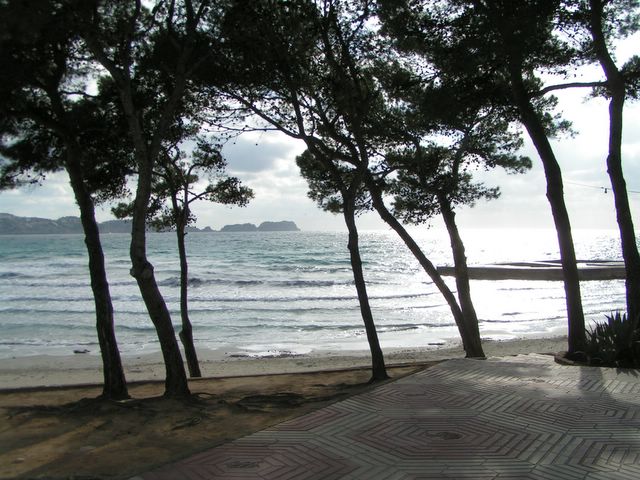 Ibiza belongs to the Balearic Islands and is also known as the 'white island' due to the predominance of its white houses.
It is a cosmopolitan island and its atmosphere, the climate, the entertainment
on offer and its attractive natural envirnonment attract a high number of tourists
all year round.
Ibiza belongs to the Balearic Islands and is also known as the 'white island' due to the predominance of its white houses.
It is a cosmopolitan island and its atmosphere, the climate, the entertainment
on offer and its attractive natural envirnonment attract a high number of tourists
all year round.
Ibiza became world famous during
the sixties due its popularity with hippies. Nowadays there just a few hippy comunes
left on the island. Although tourists still visit the island just for its beautiful
beaches and scenery the clubbing movement has made it a popular destination for
the younger crowd. There are over 40 large clubs on the island aswell as a large
number of trendy bars.
Ibiza covers 575 Km2 and has a population of 111,107. There is only one river, the Santa Eularia, on the whole island. The northern part of the island, known as Els Amunts, is made up of fertile land, small forests and almond and olive groves. The coast is spectacular with pretty coves and dramatic cliffs. The excellent sandy beaches are well equipped for tourists. The main toursitic beaches are Portinatx, Port de Sant Miquel and Sant Vicenç
Ibiza is very well connected to the Spanish mainland with flights from Barcelona, Madrid, Valencia and Alicante. You can also go by ferry from Barcelona, Valencia and Alicante. The best way to get around the island is to hire a car.
Ibiza was founded by the Phoenicians in 654 B.C. Later it was invaded and occupied by a number of cultures among them the Romans and the Moors. In 1235 it was conquered by the Christians and placed under the rule of Jaime I, the king of Aragon.
Located at the foot of a hill. Higher up you can find the old
part or the 'Dalt Vila' as it is known by the locals. The city is best known for
its bars and shops and its laid back atmosphere. 'La calle Barcelona' (Barcelona
street) is the central point of the city's nightlife based around the Port. In
Ibiza everybody can do as they please, where what they want...
Apart
from its atmosphere and nightlife the city has a number of interesting historical
mounments:
For detailed information based on user reviews and visits click on the following links:
Santa
Eulalia del Río: a tranquil touristic city focused more on family tourism.
The main street is la calle San Jaime, which is full of bars and cafés
and divides the city in two. There is a very pretty port which attracts the jet
set. The well equipped beaches have fine sand and crystal clear water.Santa Eulalia
beach has been awarded the blue flag, There are also other beaches nearby such
as Cala Mariners, Cala de S'Alga...
You can catch a ferry to Formentera from
the port. You can also hire a boat. The only golf course on the Island is located
here: Campo de Golf de Ibiza: 18 hole - par 72.
 San
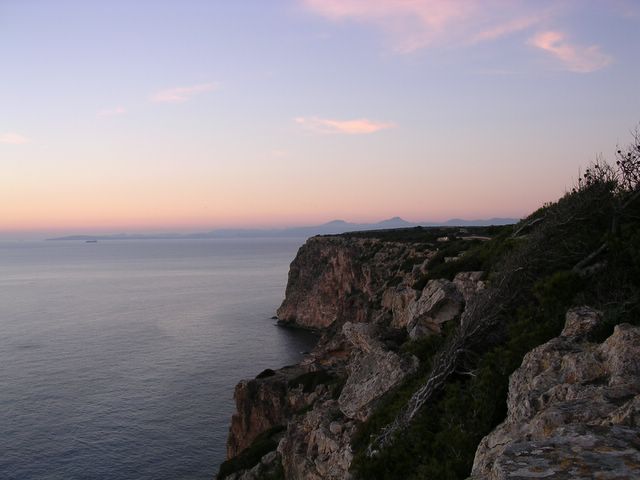
Antonio Abad de Portmany: A fishing village located in a bay oposite Sa Conillera
island, well known for its nightlife. By day its a quiet city but at night there
are a lot of people out on the streets looking for nightlife, many of them foreigners.
Just outside the city in the surrounding areas you can find some of the best clubs
on the island.It has very good beaches such as: Cala Gració and Cala Blanch
opposite Margarida island. San Antonio has a church which dates back to the 14th
century. An ancient Paleochristian temple which is now known as Santa Agnès
chapel is located on the outskirts of the city on the Northern road.
San
Antonio Abad de Portmany: A fishing village located in a bay oposite Sa Conillera
island, well known for its nightlife. By day its a quiet city but at night there
are a lot of people out on the streets looking for nightlife, many of them foreigners.
Just outside the city in the surrounding areas you can find some of the best clubs
on the island.It has very good beaches such as: Cala Gració and Cala Blanch
opposite Margarida island. San Antonio has a church which dates back to the 14th
century. An ancient Paleochristian temple which is now known as Santa Agnès
chapel is located on the outskirts of the city on the Northern road.
Jesús: A village located 3 kms from Ibiza capital. It has an interesting 16th century church built upon an ancient renaissance monastery.
Poblat Fenici de
Sa Caleta: Sa Caleta is a fishing village located in the Southwest of the
island. Opposite its port it has a peninsula called Mola de Sa Caleta which is
joined to the mainland by a thin stretch of land. In the 1980s remains of a Phoenician
settlement were discovered and in 1990 it was declared a world heritage site by
UNESCO.
Ses Salinas Nature Reserve: This covers a large
area in the Southwest of the island. It is a marshy area which has its own ecosystem.
There are a large number of marine birds in particular herons and flamingos. There
are also important salt mines in the area.
 San Miguel: Good beaches.
It has a typical white Ibizan church which in summer offers concerts and recitals.
San Miguel: Good beaches.
It has a typical white Ibizan church which in summer offers concerts and recitals.
San
José: It has a very pretty church. Good beaches such as: Cala d'Or,
Cala Bassa, Cala Tarida and Es Vedrà. This is where the highest mountain
on the island, Sa Talaisa 475 metres high, can be found.
San Juan:
The Cuieram cave which has a temple dating back to the period when the Cartagens
occupied the island is located here. You can reach some pretty coves from here
such as: Cala Sant Vicent, Cala Portinaitx and Cala Xarraca.
| Travelling to Ibiza? The following links may also be useful | |
|---|---|
| Guides provinces bordering with Ibiza and beautiful places in Spain nearby | |


 Travel guides to Spain