Travel Guides Spain | Guide to Mallorca
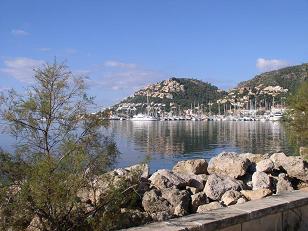 Mallorca
(or Majorca) is probably the most interesting island of the Balearic
Islands, both historically and culturally. It is also the largest. The official
language is Catalan, spoken in the local dialect called Mallorquín,
although of course Spanish is also spoken everywhere. Mallorca covers 3640 Km2
and you can visit the whole island by car in just a week. Palma is the
capital of Mallorca.
Mallorca
(or Majorca) is probably the most interesting island of the Balearic
Islands, both historically and culturally. It is also the largest. The official
language is Catalan, spoken in the local dialect called Mallorquín,
although of course Spanish is also spoken everywhere. Mallorca covers 3640 Km2
and you can visit the whole island by car in just a week. Palma is the
capital of Mallorca.
Mallorca is one of Spain's most important tourist
destinations attracting visitors from all over the world. It has a lot to offer
- great hotels, sports facilities, entertainment, museums, churches, picturesque
villages, scenery, beaches..... The marina in Palma bay is spectacular.
Archeological remains from the ' talayótica' culture which existed
between 1400 - 1200 B.C. represent some of the Mallorca's most important historical
remains.
Taking a walk from Palma
port to 'el Arenal' is also recommended. All in all its 16 kms long going from
beach to beach El Portixol, El Molinar, Coll d'En Rabassa and Can Pastilla. Other
beaches worth visiting are Illetas and Santa Ponça. They all have crystal
clear water and fine sand.
Palau de l'Almudaina: built above an ancient Moorish fort. It
was converted into a Royal palace. It now serves as a museum.
Castell
de Bellver: Gothic in style, built under the orders of King Jaime II.
La
Seu cathedral: Located above the sea wall over Palma bay. Built between
the 14th - 19th centuries, gothich style, the chapel was designed by Gaudi.
Sant Francesc Basílica : Gothic style, the
altar is Baroque.
Santa Catalina church: Located
between the cathedral and the townhall. Gothic in style.
The
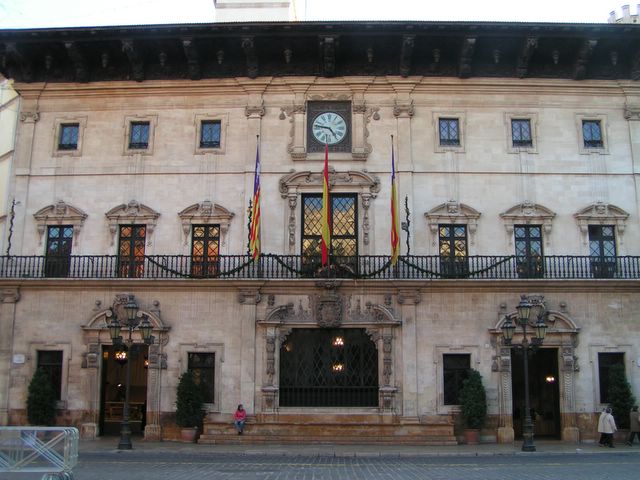
Townhall: Plaza de Cort. 17th century, it still has its original roof.
The Arabic baths: Dating back to the 10th century. Well conserved.
Shopping: You
can buy pearls, shoes, Morrocan jewellery, furniture, glass ornaments, and much
more.
Nightlife
in Mallorca: In the old part known as the Casco antiguo you
can find pubs and bars with a bohemian atmosphere near the cathedral. In the area
around the sea promenade you can find more expensive, elegant bars. In the area
known as Can Bárbara the bars are more sophisticated attracting
the younger crowd: In the area around the Paseo de Mallorca you
get more classic, typical bars open all year which are mostly visited by the locals.
Lastly around the beach areas from Arenal to Can Pastilla you get the younger
crowd and tourists.
In the old part known as the Casco antiguo you
can find pubs and bars with a bohemian atmosphere near the cathedral. In the area
around the sea promenade you can find more expensive, elegant bars. In the area
known as Can Bárbara the bars are more sophisticated attracting
the younger crowd: In the area around the Paseo de Mallorca you
get more classic, typical bars open all year which are mostly visited by the locals.
Lastly around the beach areas from Arenal to Can Pastilla you get the younger
crowd and tourists.
Places of interest on the Island of
Mallorca
Soller: Located in the Tramontana
mountain range. An agricultural village. The only railway line on the island goes
from the capital Palma to this place. The Balear Science Museum is here, with its splendid botannic garden. In nearby Deiá there is an interesting Archeological Museum and also the house
where Robert Graves lived.
Andratx: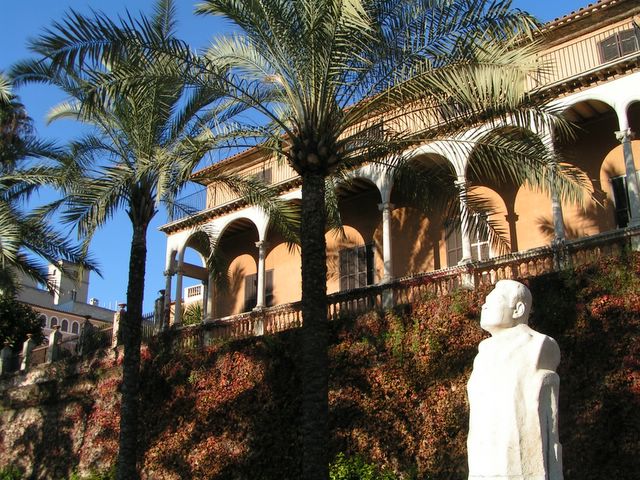 A village located in a valley.
It has an elegant, exclusive marina full of expensive yachts. Surrounded by expensive
villas. You can visit the Sant Elm castle and Sa Dragonera island from here.
A village located in a valley.
It has an elegant, exclusive marina full of expensive yachts. Surrounded by expensive
villas. You can visit the Sant Elm castle and Sa Dragonera island from here.
Valldemosa: The composer Frédéric Chopin and George Sand lived here from 1838 to 1839 in the Jesús de Nazaret charterhouse. There is also a 17th century church and a 17th century pharmacy. Concerts are held in the 16th century cloister which also houses a small museum with works by Miró, Tàpies and Juli Ramis.
Polleça: One of the most popular tourist destinations
on the island. A delightful agricultural village. To see: Nostra Senyora dels
Angels church (18th century), the Municipal museum (local archeology). On the
outskirts of the village there is a Gothic church El Calvari, la Alcudia surrounded
by 16th century walls, a Roman theatre and 10 kms away Formentor and Cala Sant
Vicente beaches.
Manacor: Well known for its pearls although furniture and glass ornaments are also made here. To see: The Archeological Museum, the Aquarium, the Santa Domingo Convent, a 16th-century convent and just 12km. from the town the famous Cuevas del Drach, beautiful natural caves (see below in Porto Cristo). If you eat here, try La Gamba de Oro restaurant.
Cala
Ratjada: A typical fishing village which has now become a residential area.
To see: the medieval Capdepera 13th century castle, a 12th century tower called
Torre de Canyamel and a beach with sand dunes.
Alfabia: Visit the
Hacienda and Jardines de Alfabia. Once the estate of Majorca's Moorish governor,
it is one of the few estates open to the public. The gardens still retain features
from the fifteenth century, including a courtyard fountain and a canal with criss-crossing
jets of water.
 Llucmajor: 8 Kms from here there is the Puig de Randa 543 metres high with
3 sanctuaries: Sant Honorat del 14th century, Nostra Senyora de Gracia and Santuari
de Cura, built in the 16th century. 14 Kms away you can find important archeological
remains from the talayótico culture from 1000 B.C. The Pi bay is quite
near.
Llucmajor: 8 Kms from here there is the Puig de Randa 543 metres high with
3 sanctuaries: Sant Honorat del 14th century, Nostra Senyora de Gracia and Santuari
de Cura, built in the 16th century. 14 Kms away you can find important archeological
remains from the talayótico culture from 1000 B.C. The Pi bay is quite
near.
Porto
Cristo:
Near Manacor. An important touristic area with a marina.
To see: the Aquarium and Exotic Park (rare birds). Caves (easy access from Port
Cristo): Coves del Drac, Coves dels Hams, Coves d'Artà. The Cova del Drac
consists of a number of caves, an underwater lake known as "Martel"
39 metres deep and 177 metres long - boat trips available. Also El Teatro and
La Ciudad Encantada caves. The Caves dels Hams: 500 metres long, with a subterranean
lake known as the Mar de Venecia. The Caves d'Artà are 40 metres above
sea level and offer beautiful views. Nearby beaches - Bahía de Artà
and the Cala Millor.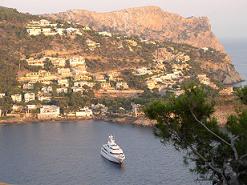
Felantix: A agricultural village - an interesting 13th century church Sant Miguel with a spectacular facade. 5 Kms away you can the find the Castillo de Santuari, which the kings of Aragon built in the 14th century.
Cabrera:
A national park. An island off Mallorca which has never been inhabited, although
it was used as a military base for centuries
Lluc: Small village situated in the Tramontana mountains. It has a 12th - 13th century Baroque style monastery. You can get to a beautiful small cove called Sa Calobra from here.
Petra: Fray Junipero Serra was born here, the founder of California in the U.S. You can visit the house where he was born. There is also a 12th century monastery called the Ermita de Nostra Senyora de Bonany
| Travelling to Mallorca? The following links may also be useful | |
|---|---|
| Guides provinces bordering with Mallorca and beautiful places in Spain nearby | |


 Travel guides to Spain