Málaga is the second most important city in Andalucía. It has an active fishing
port and is the capital of the 'Costa de Sol'. There are a lot of hotels and tourist
facilities to support the number of visitors the surrounding villages and beaches
attract each year. Malagueños, the people from Málaga, are open and friendly.
Located between the mountains and the sea and between 2 river valleys Guadalhorce
and Guadalmedina, Málaga has almost 300 days of sun a year.
The city
was founded by the Phoenicians, although there are some prehistoric remains such
as painted caves and standing stones.
Málaga was ruled by a number of different
cultures such as the Romans, Vicegothics and the Moors, something which is reflected
in its monuments and historical legacy. Perhaps the most important influence were
the Moors which is clearly seen in parts of the city such as the historic quarter.
Nowadays the greatest influence is tourism, something which makes it one
of the most important provinces in Spain.
Things to do and see in
Málaga
Walks: The historic quarter: taking a stroll
through this area is very pleasant and you'll get to see the most important historic
buildings in the city if you visit the following streets and squares - calle Larios,
plaza de la Constitución, Pasaje Chinitas, calle Fresca, Plaza del Obispo,
calle Molina Lario, calle Cister, calle Alcantarilla, plaza de la Merced, calle
Granada and calle San Agustín.
The Marina Plaza is located
in the modern part of the city. The surrounding streets were designed and built
when the old city wall was demolished opening up the city to the sea.
Remains
of Málaga's Roman Theatre : Located at the foot of the Alcazaba. The remians
date back to the Augusto period - it was used until the 3rd century. Later on,
the Moors used it to build the Alcazaba fortress.
Palaces and Castles
in Málaga
- La Alcazaba (fortress): This was
a palace for the Nazarite kings. Construction started in the 8th century and finished
in the 11th century. You can see the remains of what was once a Roman theatre
at its entrance. There is a lift which takes you up to the top of the fortress
which goes from calle Guillén Sotelo behind the townhall.
- Gibralfaro Castle: King Yusuf I built this castle
in the 14th century to defend the Alcazaba. You get spectacular views of the city
and sea from this location.
- Buenavista Palace. Picasso Museum.
14th century - renassaince style.
- Miramar Palace
- Marqués de Valdeflores Palace
- Villalcázar
Palace: 18th century - headquarters for the Chamber of Commerce.
- Zea-Salvatierra Palace: 17th century
- Marqués
de Sonora Palace: 1789
- La Aduana Palace: 19th century - currently being renovated to house the Bellas Artes Museum.
- Episcopal Palace. Used as an exhibition
centre.
Cathedrals and Churches in Málaga
In 1489 the
city was taken over by Christians, following this many religious buildings were
constructed. The 'Reyes Católicos' tried to rid the city of its Moorish
history with great zeal.
- Encarnación Cathedral: Built between the 16th, 17th and 18th centuries. Located in calle Molina
Larios.
- Nuestra Señora de la Victoria Sanctuary:
A centre dedicated to the Virgen de la Victoria
- Santos Mártires
Church (martyrs): Mártires (martyrs) square. Built under the order
of the Reyes Católicos and opened in 1491.
- San Lázaro
Chapel: 15th century -founded by the Reyes Católicos.
- San
Juan Bautista Church: calle San Juan no.3 - founded by the
Reyes Católicos in 1587. Gothic and Mudejar style.
- San
Felipe Neri church: 18th century
- Santo Cristo de la
Salud church:16th century.
- Convent
de San Agustín Convent : 16th century and reformed
in the 18th century.
- Santa Ana Abbey:. 16th century.
- Agua Chapel: Opened in 1800. Baroque style
- San
Julián Church: A church hospital paid for by the
Reyes Católicos, to look after the poor.
- Santiago
Church: Built on a mosque - founded in 1490, the facade and tower are
Mudejar style and inside is gothic mudejar style. Picasso was baptised here in
1881.
Museums (there are 19 museums in Málaga, 15 of which
are in the historic quarter).
- Pablo Picasso Museum: Located in the Buenavista 16th century Palace - you can see 155 works by Pablo
Picasso.
- "La Malagueta" Bullfighting Museum: Located
in the 'Plaza de Toros' this museum is dedicated to the world of bullfighting.
- Contemporary Art Centre : Calle Alemania.
- MIMMA. The Interactive Music Museum of Málaga
- The
Interactive Science and Technology Museum of Málaga
- Picasso's
Birthplace - Picasso Foundation: Plaza de la Merced 15. Bought by the
townhall in 1988, it houses important documents and bibliography.
- Casa
de Muñecas Museum: Calle Alamos 32 - a Baroque 18th century palace.
- La Alcazaba Archeological Museum: Calle Alcazabilla
- it holds ceramics from the Moorish period.
- Arts and Popular
Traditions Museum
- Ecological museum Lagar de Torrijos
- Loringiano
Museum
- Museum-Aquarium Aula del Mar
- Cister Museum.
Plaza de la Constitución
(Constitution Square): Located in the heart of the historic quarter. Renaissance
16th century style.
Plaza de la Marina (Marina Square): Surrounded
by palm trees and modern buildings, you can reach the seafront from here.
Hotels
and accommodation in Málaga
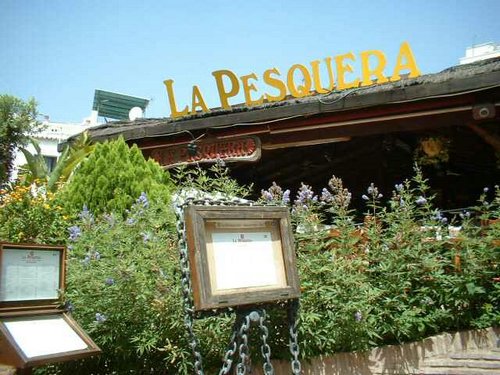
- click on any of the following for reviews
The province
Malaga is a province located
between the mediterranean and the mountains. The coast the 'Costa del Sol' is
outstanding. The province's hotels, restaurants and other tourist facilities are
all first class. The airport is well connected. The surrounding provinces are
also very beautiful - Cádiz, Granada, Córdoba, Sevilla, Almería…and
you can easily go on a day trip to one of these places. The mountains surrounding
Málaga are dotted with small white villages - "
Los Pueblos blancos"
with Moorish origins and sometimes Moorish remains.
What to buy in Málaga
You
can get ceramics, wines and liquers in Ojén; wood and jewellery in Marbella;
Fuengirola has a tradition for craftsmanship and you can get all sorts of hand-made
products. Ronda is good for antiques.
Towns in Málaga province
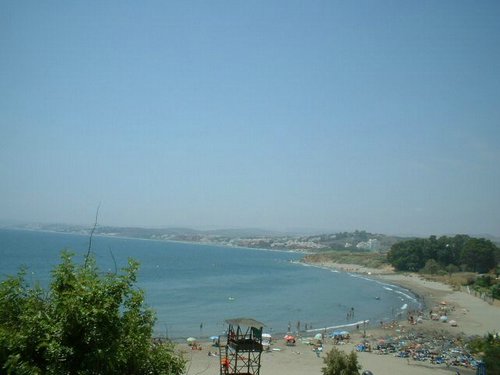
- Antequera
- Torremolinos
- Marbella
- Fuengirola
- Alhaurín de la Torre
- Alhaurin el Grande
- Estepona
Villages and surrounding areas in Málaga Province
- Antequera: Interior
- Antequera: Historic - it
had strategic importance during the Roman and Moorish periods. Worth a visit.
- Fuente
de Piedra: Located to the north of Antequera, it has a natural park with
a large number of wild birds.
- Torcal Natural Park: Located on the outskirts of Antequera. Interesting rock formations, there are
foxes, eagles, vultures and a wide range of wild flowers especially wild orchids.
- Archidona
- Campillos
- Cuevas
de San Marcos
- The Coast: Costa del
Sol.
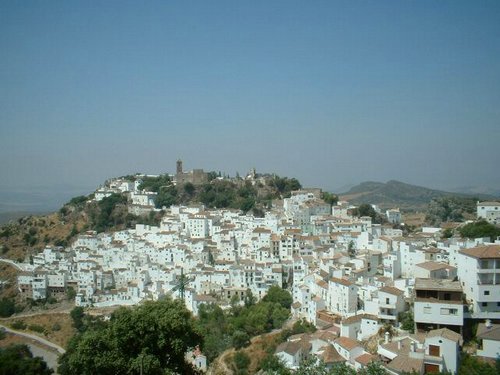
- Torremolinos: Crowded tourist resort, good hotels,
sports and other facilities.
- Casares
- Benalmádena
- Fuengirola: Fishing village surrounded by mountains -
lots of tourists.
- Mijas Pueblo: A typical,
picturesque white mountain village 8km from Marbella.
- Ojén:
A white mountain village 10 mins from Marbella.
- Istán:
A white village located in the mountains above Marbella - founded in the 9th century
by the Moors.
- Cabo Pino: A small, new village built
around the marina.
- Marbella: Holiday retreat
for the European jet set.
- Puerto Banús: One
of the most exclusive marinas in Spain.
- San Pedro de Alcántara:
- Estepona: Touristic
- La
Axarquía: Costa del Sol. Valley where lemons, oranges, vegetables
and fruit are grown. Located between the mountains, Velez river and the sea. The
coast is characterized by steep cliffs, small coves, beaches and mujedar villages.
Touristic.
- Nerja: Coastal villages with beaches - good
atmosphere. Cave paintings.
- Rincón de la Victoria:
Family atmosphere - clean beaches.
- Vélez Málaga:
A typical white village next to the Velez river.
- Torrox:
Roman and Moorish remains.
- Málaga: Costa
del Sol
- Málaga: Capital of the province.
- Alhaurin
de la Torre: San Sebastián church 16th century. Alamillo hermitage
19th century. Santo Cristo hermitage 15th century.
- Ronda:
Interior. Ronda Mountain range.
- Ronda: Located on top
of a mountain with beautiful vie
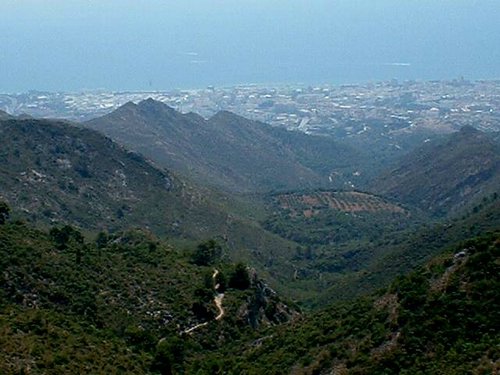 ws from Alameda del Tajo Mirador (viewing point).
You can see remains of the wall, arabic baths and doors. It's an enchanting city
with lots of history.
ws from Alameda del Tajo Mirador (viewing point).
You can see remains of the wall, arabic baths and doors. It's an enchanting city
with lots of history.
- Faraján
- Cortes
de la Frontera
- Arriate
- Guadalhorce
Valley: Interior. Guadalhorce valley, fertile market garden area, historic
(evidence of prehistoric activity).
- Alhaurín el Grande: Important prehistoric remains
- Alora:
- Cártama
- El Chorro: Village located
in a valley.
- Coín: A typical white village.
| Travelling to Málaga?
The following links may also be useful |
| Guides provinces bordering
with Málaga and beautiful
places in Spain nearby
|
|
|



 Travel guides to Spain