Tenerife,
the biggest island attracts the most tourists. It is located in the middle of
the 7 islands, 1,300 kms from the Spanish peninsula and 300kms from Africa. The
island is triangular and covers 2,034 Km2. Mount Teide, 3,718mts above seal level,
is Spain's highest mountain and is the third highest volcanoe in the world. It
is located on this island within the Teide National Park.
.JPG) You can reach Tenerife either by boat or plane if you are travelling from Spain. There are 2 airports in Santa Cruz de Tenerife. One is called Tenerife sur Reina Sofía and is in Granadilla de Abona, 64 Km away from Santa Cruz and the other is Tenerife norte Los Rodeos located in La Laguna just 13 Kms away from the capital. On La Palma and El Hierro the only flights that operate are to Santa Cruz de Tenerife. The only way to get to La Gomera is by car ferry which takes an hour or by hovercraft which takes 40 minutes. All the islands have good roads so it is easy to explore them by car or on a organized coach trip.
You can reach Tenerife either by boat or plane if you are travelling from Spain. There are 2 airports in Santa Cruz de Tenerife. One is called Tenerife sur Reina Sofía and is in Granadilla de Abona, 64 Km away from Santa Cruz and the other is Tenerife norte Los Rodeos located in La Laguna just 13 Kms away from the capital. On La Palma and El Hierro the only flights that operate are to Santa Cruz de Tenerife. The only way to get to La Gomera is by car ferry which takes an hour or by hovercraft which takes 40 minutes. All the islands have good roads so it is easy to explore them by car or on a organized coach trip.
The history of Tenerife
.JPG)
Tenerife is a volcanic island. From Neolothic
times it was inhabited by the'guanches'. The kingdom of Anaga, governed
by Mencey Beneharo ruled Tenerife. The prehispanic period lasted until 1494 when
the 'castellanos' tried to conquer the island. This did not happen until
1496 when the island became part of the Kingdom of Castilla.
From the 15th
century onwards society on the islands was made up of Spanish soldiers, sailors,
merchants and the 'guanches'. This is when many of the islands' fortresses
and castles were built in order to defend the island from attack.
Santa
Cruz grew around San Cristóbal castle. Santa Cruz de Tenerife officially
became a town in 1803 following a Royal decree by king Carlos IV, granting it
independance from La Laguna (then the capital of Tenerife ).
Santa Cruz de Tenerife
Santa Cruz is located in the eastern
part of Tenerife. It has 58 kms of coastline. It has a very mild climate without
much change in the temperature between day and night. The average temperature
is 22ºC all year round.
Places to visit in Santa Cruz de Tenerife
On foot: The centre of the city where people gather to meet
is la Plaza de España, near the port. The De calle del Castillo leaving
the square is the most important street in the city. It also connects the Plaza
Wheiler to the Plaza de la Candelaria. The streets calle del Pilar and calle San
José are full of shops. The area around the port is very pleasant. Almost
every area in the city has its own park. Another important area is the Plaza de
Principe de Asturias, Plaza de los Patos and calle de la Noria, (the Iglesia
de la Concepción is located at the end of this street).
Palaces and Castles in Santa Cruz de Tenerife
- Palacio de Carta:
18th century - a national monument .
- Palacio Martí Dehesa (Paza de los Patos): Modernist style - this was the former Government Headquarters
of the Canary Islands.
Cathedrals and Churches in Santa Cruz de Tenerife
- Iglesia de la Concepción (Pl. de la Iglesia,
s/n): This Baroque church dates back to 1502. It was reformed in the 17th and
18th centuries. Things to look out for: the Gothic Virgen de la Consolación,
the 17th century Cristo del Buen Viaje and the Genoese baptismal font.
- Iglesia de San Francisco (Pl. de San Francisco, 1): This was built
in the 17th and 18th centuries in a Baroque style. Things to look out for are
the Baroque altarpiece, the columns and the portico.
- Iglesia del Pilar (c/ del Pilar): 18th century. Things to look out for: the Baroque altarpiece
and the statue of the Virgen de las Angustias.
- Ermita de San
Telmo: 15th century. Sponsored by the Seafarers Guild. Things to look out
for: the Mudejar panelling, the Renaissance alterpiece, the black stone facade.
- Ermita de la Virgen de Regla: 17th century. Dedicated to the Virgen
de Guadalupe and the Virgen de Regla.
Museums
in Santa Cruz de Tenerife
- Museo de la Naturaleza y el
Hombre (c/ Fuente Morales, s/n, in Santa Cruz de Tenerife, Tel: 922 535 816):
This is located in a building which used to be the civil hospital. The building
is Neoclassic and was designed by the architect Oráa. This museum looks
at the origins of the Canary Islands and the history of the nature found on the
islands. In the museum you can see the history of its geology, its volcanos, its
ecosystems, its meteorology, marine biology and archeology all in a didactic exhibiton.
- Museo Municipal de Bellas Artes (c/José Murphy, 12, en Santa
Cruz de T., Tel: 922 24 43 58): This has paintings from the 17th, 18th and 19th
centuries from the Canary Islands as well as national artists too; There are also
some sculptures and other objects on display.
- Museo Militar Regional de
Canarias (c/ San Isidro, 1, en Castillo de Almeida, Tel: 922 843 500): Since
1988 this museum has been housed in the Almeida castle, in a very pretty setting.
It has maps, uniforms, antique arms, oil paintings and watercolours showing scenes
from military life. Perhaps most interesting is the cannon that blew the arm off
Admiral Nelson in 1797 and the flag from the battle that took place here.
- El
Tanque: This is an old petrol deposit that has been used as an exhibition
centre since 1997. It is also used for conferences, concerts and other cultural
events.
Important Buildings in Santa Cruz de Tenerife
- The Town Hall (c/ Vieira y Clavija): This is located in a Modernist
palace which is also known as the Palacio de los Dragos, due to the 2 drago
trees that are on each side of its main entrance. It has been used as the Town
Hall since 1916.
- Mercado de Nuestra Señora de Africa: This
is a food market full of products from the Canary Islands
- El Auditorio: Located on the Cabo de Llanos and designed by the architect Santiago
Calatrava, in 2003. This auditorium has a capacity of up to 1,600 people, it also
has conference facilities with a capacity of 428).
- Modernist buildings
in Santa Cruz: There are quite a few Modernist buildings in Santa Cruz
located around the Plaza de los Patos. These are the Town Hall, the Bank of Spain,
the Martí Dehesa Mansion and the former headquarters of the Canary Islands
government.
- Círculo de Amistad XII de Enero: This is a
cultural society which is housed in one of the most beautiful colonial buildings
in Santa Cruz.
- Teatro Guimerá: This was built by the architect
Manuel de Oraá in 1848. It was opened on 25th July in 1851. It is the most
important theatre in the city.
Parks and Gardens in Santa Cruz de Tenerife
- Parque Municipal García
Sanabria: Botanic gardens built in 1926 set within an area covering 55,000
m2. You can see examples of all types of vegetation found on the Canary Islands
as well as some sculptures from the Modern art exhibition that was held here in
1974.
- Parque de la Granja: Entrance on the Avenida de Madrid or
Avenida de Benito Pérez Galdós. Built in 1969. This park is slightly
larger than the Municipal park. Very popular with families (there is a playground
for children) and you can always see a lot of people doing sports here.
- Parque
Secundino Delgado: Located in the neighbourhood 'Barrio de Salamanca'.
Squares in Santa Cruz de Tenerife
- Plaza de España: This is a meeting place in the centre of the
city.
- Plaza de la Candelaria: This is the oldest square in the
city. It has a Neoclassic monument called the "Triunfo de la Candelaria"
- Plaza
de los Patos: This conmemorates the 25th July 1797 when the city beat off
Admiral Nelson in his attempt to occupy the island.
Monuments
- La Candelaría (Pl. del Pilar): The virgen de la Candelaria is
the patron of the Canary Islands and this monument which shows the virgin surrounded
by the gaunches - it is always surrounded by flowers.
Shopping and typical products from Tenerife
The best shopping area in Santa
Cruz de Tenerife is around the Plaza de España, Plaza del Castillo, Calle
del Pilar and Calle de San José.
Tenerife: Typical products
to buy are palmero and habana cigars, wines and liquers from the
island.
La Palma: Cigars and fabrics.
La Gomera:
Cigars, fabrics, honey from Palma, rum, wines, cheese and wood carvings
El
Hierro: Wood carvings, cold meats especially smoked chorizo, cheese cake
an different types of jam.
Fiestas in Tenerife
Carnival: These are the best known fiestas in Tenerife and La Palma. They take place
every year to mark the beginning of lent. They are almost as good as the Carnival
in Río de Janeiro in Brazil. It takes all year to prepare the costumes
for the processions. They take place at the end of February or beginning of March
every year and people travel to the island from all over the world to experience
this colourful street party.
Corpus Christi: These fiestas take place
in May or June in La Orotava, flowers and figures made of sand cover the the town
hall square.
Virgen de la Candelaria: The patron saint of the Canary
Islands. Celebrations take place on 2nd February every year when there is a procession
to the Basilica in Candelaria.
Virgen de los Remedios: The patron saint
of Santa Cruz de Tenerife, celebrations take place every year on 15th August.
Fiesta del Gran Poder y de la Virgen del Carmen: Processions with a statue
of the Virgin del Carmen take place in the fishermen's neighbourhood and at the
same time a procession with the Cristo del Gran Poder goes through the elegant
streets around the port. Both processions meet in the port and return together
to their churches. This year celebrations take place on 17th July.
Fiesta
de San Juan: 24th June, these fiestas take place in Puerto de la Cruz, on
Playa Charcón and Playa del Muelle, goat shepherds celebrate the summer
solstice by handing out cheese and milk.
Fiesta de San Andrés also known as los cacharros or la Castaña: 29th November, in el
Puerto de la Cruz. People meet in the Plaza del Charco where they throw things,
eat chestnuts, ' corn and sweet potatoes and drink wine.
Fiesta Fundacionales:
3rd May, in Puerto de la Cruz. A mass and procession take place to celebrate these
fiestas.
Bajada de la Virgen de las Nieves: This fiesta takes place
every 5 years, the next one will be in 2010 when a statue of the 'virgin' is brought
down from the mountain to Santa Cruz.
Places to visit on the island of Tenerife
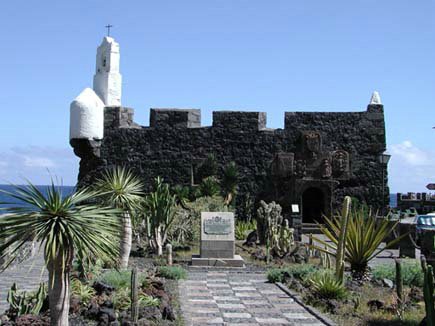
- La Laguna: A world heritage centre since 1999, this is the second most important
city on the island after Santa Cruz de Tenerife. It used to be the capital of
the island. It became a city in 1500 and its layout has remained unchanged since
then. It has 1,600 Mudejar buildings. It is also a colonial city, containing a
mixture of European and American styles. It has the only university on the island.
Fantastic scenery especially the Anaga mountains and views from the Pico del Inglés
and La Cruz del Carmen
- Ntra. Sra. de los Remedios Cathedral (Plaza de Fray Albino): This is a church from the 16th century which became
a cathedral in 1919. In 1983 it was given special cultural status. Things to look
out for are the altar, the pulpit and paintings by Luján Pérez,
Cristóbal Hernández de Quintana and Fernando Estévez.
- The
Town Hall: Located in a building dating back to 1546 by Juan Nepomuceno.
The meeting chambers were refurbished in 1888 by Rafael de Oráa.
- Casa
del Corregidor: This is the oldest building in the city dating back to the
16th century. Itused
to be the town council.
- Ermita de San Miguel: This is a
small chapel located in the Plaza del Adelantado. It was built in 1506 by Fernandez
de Lugo. Given special cultural status in 1986 (see photo).
- Monasterio
de Santa Catalina de Siena: Also located in the Plaza del Adelantado,
built in the 17th century and home to Fernando del Lugo. It has some very valuable
and interesting furniture inside. Also given special cultural status in 1986.
- Palacio
de Nava: Plaza del Adelantado, built in 1776 by Tomás de Nava Grimón
and Porlier, the 5th Marquess of Villanueva del Prado, (creator of the Botanic
Gardens in La Orotava). It consists of various styles: Mannerist, Baroque y Neoclassic.
Given special cultural status in 1976.
- The Anaga Rural
park: The park covers a mountain range. it is striking because it is very
green with a lot of vegetation. You can go on very pleasant mountain walks here
along some marked tracks. Located between La Laguna and Santa Cruz. This is where
the Pico del Inglés and La Cruz del Carmen viewing points are.The Monte
de las Mercedes and Tejina, el Valle Guerra and Tacoronte are also very pretty.
- Puerto de la Cruz: Located in
the Orotava valley 37 kms from Santa Cruz de Tenerife, in the north of the island.
This is a pretty, cosmopolitan city. It attracts a lot of tourists. English tourists
started visiting this city towards the end of the 19th century. The best place
to start exploring the city is from the Plaza del Charco (a meeting
point in the city) and the fishing port. Things to see:
- Castillo
de San Felipe 17th century, built to defend the city.
- la Iglesia
de Ntra. Sra. de la Peña de Francia built in 1697.
- Ermita
de San Telmo built in 1870.
- Plaza de San Telmo.
- la
Ranilla, de la Paz and de San Amaro neighbourhoods.
Places to visit near Puerto de la Cruz: Garachico, a coastal
village, located just 10 Kms away; the Botanic Gardens; aleisure area designed
by Cesár Manrique;
Complejo Lago Martianez, a leisure complex with
swimming pools, gardens, restaurants, the
Casino de Puerto de la Cruz and beaches -
Playa del Charcón, Playa del Castillo and la Playa de
Punta Brava; Loro Parque - a zoo specializing in parrots.
- Los Cristianos:This is a touristic city with
a very pleasant climate in the south of the island. It has a fishing port and
beaches with golden sand which attract a lot of tourists. Beaches: la playa
de Las Caletillas, El Camisóny and the most well known la Playa
de las Américas where there are a lot of large hotels. Car ferries
and hovercraft to La Gomera and El Hierro leave from here.
- Costa
Adeje: The Adeje coastline starts from the Playa de las Américas.
From here you can visit: Playa del Duque, Fañabé,
Torviscas, San Eugenio, all of which have large hotels and good beaches. You can
go on boat trips from the Colón marina. You can also visit
the Tropical Gardens (Jardín Tropical de las Rocas).
- Iglesia
de Santa Ursula: Dates back to the beginning of the 16th century. Colonial
and Baroque styles. Things to look out for are the Mudejar panels in the chapel,
the French 17th century tapestries from the Royal Gobelino workshops in Paris,
a German 17th century statue of Santa Úrsula; a statue of San Juan Bautista.
- Casa
Fuerte: Built in 1556 by Pedro de Ponte. It belonged to the Marquess of
Adeje and the Count of la Gomera.
- Candelaria: This is a coastal village located 15 kms from Santa Cruz de Tenerife.
The Basilica of Nuestra Señora de la Candelaria (patron saint of the Canary
Islands) is located in the village square where thousands of pilgrims gather on
the 2nd February.
- Basílica de la Candelaria: 14th century
Neoclassic. This is a statue of a black virgin found by the guanches in el Mencey
Acayno, a cave it was then taken to another cave by the sea called Mencey Achbinico
where it stayed until the 2nd February 1526 when it was taken to the Basilica.
In 1826 it was washed away by a wave and the Dominican monks produced a replica
which is still on display today.
- La
Orotava: Orotava valley (Valle de la Orotava) in Tenerife province.
It comprises of several villages among which is La Villa de la Orotava, declared a historic and artistic centre in 1976. It is next to Puerto de la Cruz,
on the coast. The valley has impressive vegetation, it is very fertile and consists
of many different areas: mountains, glens, a camp site. The area called 'el Rincón'
has a very rich landscape and 3 pretty beaches: El Bollullo, Los Patos and El
Ancón.
There are various interesting buildings to look out for in La Villa de la Orotava:
- the Cementery built in a Norman style in 1823 by Fernando Estevez.
- Iglesia de
la Concepción, built upon a 15th century chapel. Baroque, 1788.
- Villa de los Molina: this is a mansion built in 1590, the
oldest in the town.
- La Casa de los Balcones: 1672
- Various
17th and 18th century palaces and mansions.
- Parque
Nacional de las Cañadas del Teide: Located in the Orotava valley
(Valle de la Orotava), in las Cañadas in a volcanic 16 km wide crater.
There is just one road that crosses it which goes as far as Teide. It goes past
the Las Cañadas National, the cable car station and the visitor centre.
Mount Teide is the highest peak in Spain at 3,718 mts. above sea level. It
is an active volcano which has been dormant for many years. The cable car takes
you within 100 metres of the peak. You can climb the rest on foot.
Las Cañadas
peak is 3,414 metres above sea level and is an active volcano.
The visitors
centre has information on the origins of the park, its vegetation, types of rocks,
lava...
There are 2 viewing points.
In las Cañadas the Roques
de García are strange rock formations made from lava, they are
very brightly coloured due to their copper content. There are also some unusual
flowers too due to the lava, ash and rocks they grow out of.
From Tenerife you can visit the other islands in the province
- La Gomera: This is the most mountinous
island, with lots of vegetation. There are a lot of valleys too. It is possible
to explore the island on foot if you have enough time. Another option is to go
by bus or car. La Gomera is 40 minutes from Los Cristianos, Tenerife by hovercraft
and 90 mins by car ferry from Santa Cruz.
Things to see:
- The
Garajonay National Park (world heritage centre)
- San Sebatián: This is the most important village on the island. Colón stopped here before
crossing the atlantic.
- Some good beaches: Santiago, Las Rosas, Valle
Gran Rey.
- El Hierro: This
is the smallest of the Canary Islands. It doesn't have many beaches and so is
the least touristic. The capital is Valverde which is located in the interior
surrounded by pine forests and interesting vegetation. It is a charming small
town with steep winding streets.
Things to see:
- La
Ermita de los Reyes, an ancient chapel located in the south
- The
fishing port La Restinga: there is a diving centre.
- La
Palma: This is the most northern of the Canary Islands. It is very
green with a lot of vegetation due to its humid, cool climate. Its mountains are
covered in pine forests and giant ferns.
Things to see:
- La
Caldera de Taburiente National Park: It has an 8 km wide crater. A very
rich landscape and spectacular plants. You can also visit 2 dormant volcanic craters:
La Cumbrecita and Los Muchachos.
- Santa Cruz de la Palma: This is the capital. It is a fishing village with some very pretty typical houses
dating back to the 16th century. Things to see: Iglesia del Salvador, with
a very pretty Mudejar panelled ceiling; the Town Hall; the Plaza de la Alameda,
in which you can find a copy of the 'Carabela Santa María'.
Hotels and Accommodation in Tenerife
See our selection of the best value Hotels in Tenerife or search for a hotel in the box on the right.
| Travelling to Tenerife?
The following links may also be useful
|
| Guides to other Canary Islands
|
|



 Travel guides to Spain