Fiestas | Semana Santa
Spain celebrates Easter Week much more than most European countries. During the whole of Semana Santa, (Holy Week), street processions are organised in most Spanish towns each evening, from Palm Sunday to Easter Sunday.
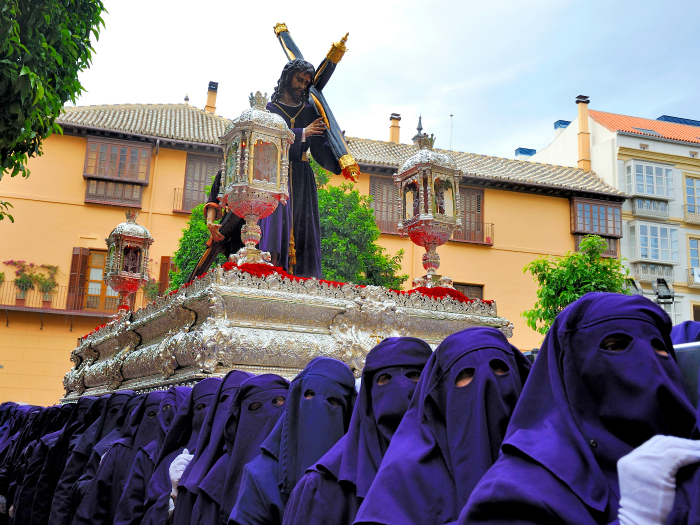
People carry statues of saints around on floats or wooden platforms, and an atmosphere of mourning - which can seem quite oppressive to onlookers - and the Easter week processions end with Easter Sunday, a day full of light and colour when church and cathedral bells are heard ringing throughout the country.
In some of the processions, marchers wear clothes reminiscent of the klu klux klan. Infact their clothes are meant to depict the Nazareños, people from Nazareth. The religious fraternities and brotherhoods are responsable for carrying the statues and organising the penitents and musicians. The Nazareños follow the people who carry the floats bearing sculptures and models of biblical scenes.
The people who carry the weight of the floats are called "costaleros" and are expected the carry these "thrones" with solemnity and grace. They use a small cushion, "costal" to protect themselves from getting sores from the wood rubbing against their skin during the long processions.
The most famous Easter celebrations are held in various Andalusian towns, Valladolid, Toledo, Segovia, Burgos, Zamora and Cuenca.
More Info: Semana Santa
| Fiestas en España, Fête en Espagne, Festen en España | |
| Febrero / Febrero / Février | Carnaval |
| Marzo / März / Marte | Las Fallas de Valencia |
| Abril / Abril / Avril | Semana Santa ( Pascua, Ostern, Pâques ) |
| Junio / Junio / Juin | Las Hogueras de San Juan, Alicante |
| 06 de diciembre | Día De La Constitución |